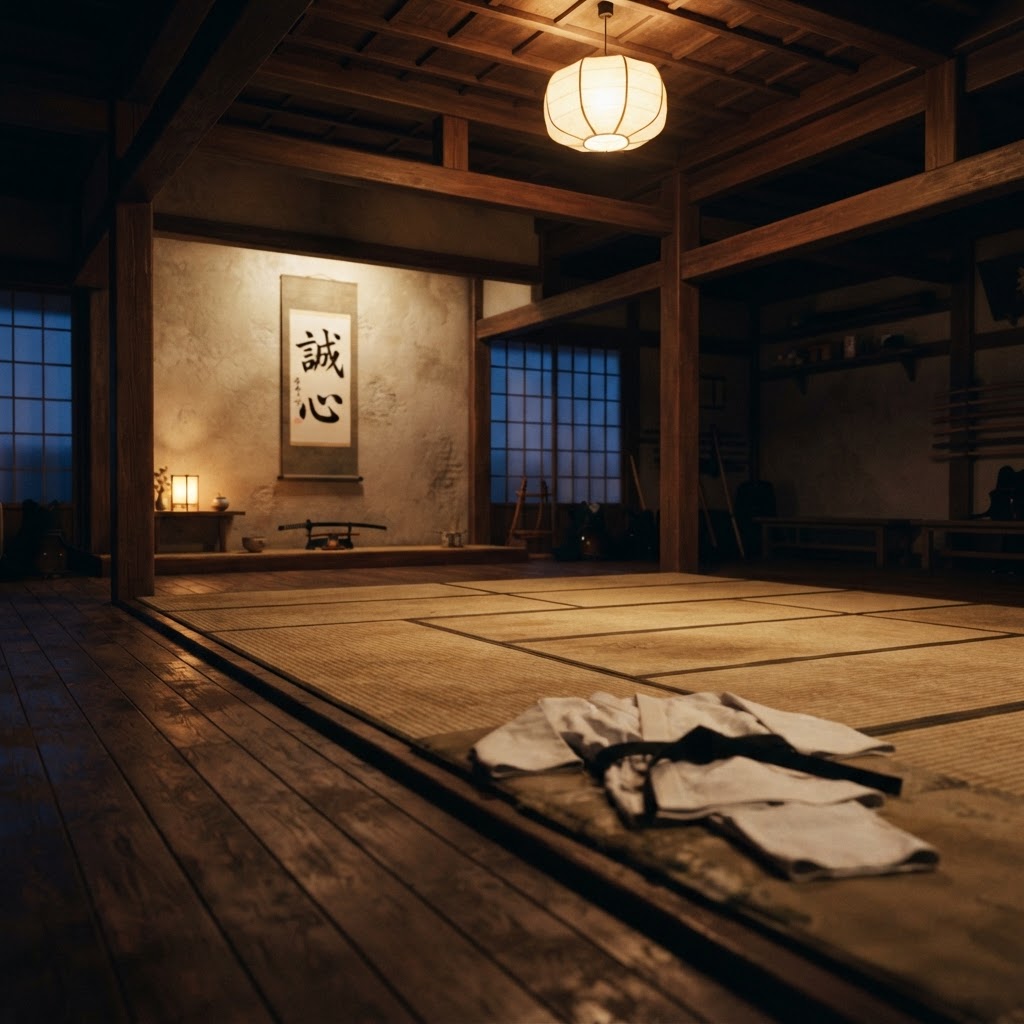
What to Expect in Your First Ninjutsu Class
Walking into a martial arts school for the first time can feel like stepping into another world — unfamiliar etiquette, a language you don't speak, and people rolling around on mats in ways that seem to defy physics. If you've been thinking about trying a class at Tatsujin Dojo, this post will walk you through exactly what to expect, so you can walk through our doors with confidence instead of nerves.
You Don't Need to Be in Shape to Start
This is the single biggest misconception we hear: "I need to get in shape first." You don't. Bujinkan Ninjutsu and Daito Ryu Aikijujutsu are built on principles of balance, timing, and body mechanics — not brute strength or cardio endurance. You'll build fitness as a natural byproduct of training, at your own pace, surrounded by people who were all beginners once.
If you can walk up a flight of stairs and lower yourself into a squat, you can train. Everything else develops on the mat.
What to Bring (and What to Leave at Home)
For your first class, you need surprisingly little:
- Comfortable clothing — a t-shirt and sweatpants are perfect. No gi required for your first visit.
- Clean, bare feet on the training floor — we train without shoes, so just make sure your feet are clean.
- A water bottle and a small towel.
- An open mind — this is the most important thing.
Leave your ego at home. Nobody is going to judge your flexibility, your fitness, or your knowledge. The only expectation we have is that you try, stay safe, and treat your training partners with respect.
What a Class Actually Looks Like
Our Friday evening and Sunday afternoon classes follow a simple structure:
Rei (bowing in). We begin with a short bow — a moment of respect and focus, not religion or ritual worship. It marks the transition from the outside world to training.
Junan taiso (body conditioning). We start with gentle mobility work and traditional Japanese stretching. This warms up your joints and connective tissue, and it doubles as balance and coordination training.
Kihon (fundamentals). You'll learn basic movements — footwork, posture, falls, and simple techniques. As a beginner, you'll be paired with experienced students who guide you through each step.
Waza (technique practice). This is the heart of class. You'll practice specific techniques from the curriculum with a partner, alternating between the roles of tori (the person performing the technique) and uke (the person receiving it). Both roles teach you equally — receiving technique teaches you more about body structure than applying it does.
Randori / application. In more advanced sessions, we explore how the techniques behave under less predictable conditions. As a beginner you'll watch, participate gently, and absorb.
Rei (bowing out). We close the class the same way we opened it.
The Etiquette, Demystified
Traditional Japanese martial arts carry customs that can feel foreign at first. Here's the truth: nobody expects you to memorize them on day one. Follow the person next to you, and you'll pick them up within a class or two. If you're ever unsure, just ask — asking questions is genuinely welcomed here.
The core of it all is respect: for your teacher, your partners, the space, and yourself. Everything else is just the form that respect takes.
"But I've Never Done Anything Like This"
Good. That means no bad habits to unlearn. Many of our longest-training students walked in with zero martial arts background — no sports background, no dance, nothing. The arts we teach are among the oldest in Japan, and they were designed to be learned from nothing.
What matters is consistency. One class a week, sustained over months, will change how you move, how you carry yourself, and how you respond to pressure. That transformation is available to literally anyone willing to show up.
Come Try It — It's Free
Your first class at Tatsujin Dojo is completely free. No commitment, no equipment to buy, no experience required. You'll train alongside regular students, get personal attention, and leave with a real feel for whether these arts are right for you.
We're at Industry City in Sunset Park, Brooklyn — Friday evenings and Sunday afternoons. Register for your free class or reach out with any questions. We'd love to meet you on the mat.